

Monaco GP: Formula 1, Leadership and Hierarchy
After the successes in Bahrain and Australia, the Scuderia did not find its way to win in Imola, Miami, Spain and last, Monaco.
What is truly going on at Ferrari? A negative succession of episodes influenced Ferrari’s performance and overall competitiveness, ringing that alarming bell which sets aloud either Ferrari structures leadership and hierarchy, or Red Bull will idle easy to another championship. Let’s look at what happened at the Monaco GP in detail.
A Monegasque Nightmare
It begun with the best premises. Monaco is Ferrari. Leclerc, the homeboy was drawing trajectories to perfection, determined to paint his Monalisa, his perfect piece of work in his home. Leclerc through the weekend was incredible, fast, driving the F1-75 with a level of accuracy and class. He was the fastest on track, he was pole position once again, the fifth out of seven races.
Incredible Charles.
Sainz had a good pace as well, and he was able to secure P2 on Saturday, handing off a historical front row to Ferrari, which looked to had Ferrari securing lead and points for the championships. It looked to be a smooth victory and weekend for Ferrari.
Monaco GP wasn’t of the same idea. Or at least the weather.
While the over two hundred thousand people attending the race over the weekend were ready to celebrate Charles, and the home jewel looking to break the curse that hadn’t him finishing or winning his home Gran Prix, the weather was not of the same idea.
Heavy rain, race postponed for over 30 minutes. Monaco becomes a burlesque dance of mechanics running with tires racks and umbrella girls running around the track, tires getting changed to wet with the heavy rain dumping hard on drivers try to stay as dry as possible. Burlesque and rainy, nothing more poetic for Monaco, a dance that Ferrari couldn’t handle, turning it into a nightmare.
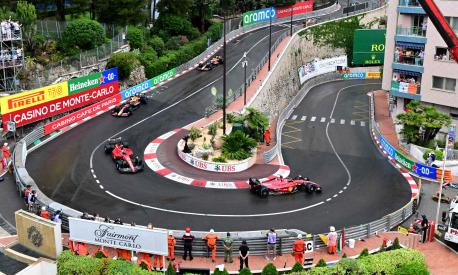 The greatest leadership skill in Formula 1 is the agility to respond to adversity. We raised the concerned about these city layouts deterring the quality of a race (add link of the part in Miami and Barcelona), as drivers have narrow tracks for these new extremely bigger single seaters.
The result is driver unable to engage, little to no areas of the track where drivers can build an overtake, and therefore, race heavy influenced by race qualify and pit wall strategy.
For what concerns Monaco GP, the ability of Leclerc and Sainz to gain front row, Ferrari’s success was on Mattia Binotto’s leadership.
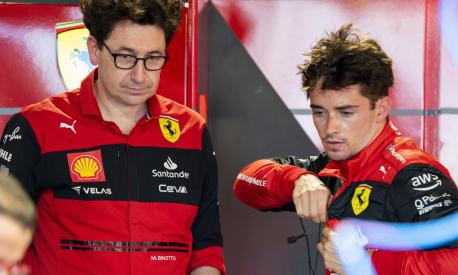
Mattia Binotto – which in pre-season we spend some time talking about the importance of his role and leadership this season – hesitated.
Red Bull, with little chances to be either faster or find even space on track to attempt an overtake, was obviously going to make a hazardous move with changing tire strategy as the clouds were clearing out in Monaco.
When it comes to increment the element of risk at Red Bull, Christian Horner knows that
a). He needs to take a quick decision
b). He established Verstappen is driver #1, Perez #2.
A risky decision involves a quick change of strategy, and Perez. Red Bull hierarchy is established and benefits Horner in these key moments.
In the pit wall battle, Binotto’s reaction time was of one lap, too much and too costly. On top of that, Sainz arguing the strategy and not pitting after Perez, was even more costly. In that moment, Ferrari performance and competitiveness crumbling, and serving the race to Red Bull in a silver platter.
Poor Leclerc. Leaving the race in tears and with a disappointing P4, with Carlos Sainz still battling for his rights to overturn pit wall orders to what he believed was a more favorable choice for victory. P2 for him.
Lesson of the weekend from Monaco GP
Leadership and hierarchy must improve in pit wall. Binotto is called to make an impact with team strategy and support Leclerc and team unlike what happen at the Monaco GP. Overall, Ferrari can be peaking performance and level up in competitiveness.
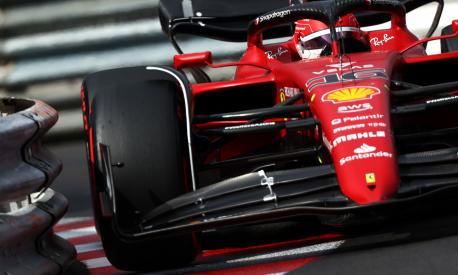 As far as performance goes, the F1-75 is one of the best cars in the race. Monaco is a track that privileges downforce and Ferrari was called favorite to win. The response of qualify was excellent. The car’s ability to quickly spin off slow corners and overall race pace was incredible. In the last two races, Ferrari dem0nstrated greater ability in the tires management department, which is another key performance aspect.
The car needs Binotto’s support to adopt a strategy to exploit Ferrari superior downforce, and to quickly react to unpredictability, whether is weather conditions or car’s reliability, which showed first alarming signs in Barcelona.
Performance will peak with a stronger pit wall.
of the weekend. It was bound to happen, something we noted in the previous races. The hesitation is not acceptable, the panicking team radio communication is not acceptable. This level of pit wall performance is not professionally reputable.
As far as competitiveness goes, we have two outstanding drivers. Actually, we have a championship (worthy) driver and an outstanding driver.
Leclerc is at 5 pole positions out of 7 races this year. Sainz is fighting with its own demons and admitting he did not build the best feeling with the F1-75 yet, although in the last races the Spaniard is looking more consistent.
The most delicate paradigm is either you make a team competitive, or you make two drivers competitive.
You cannot have both.
 Schumacher and Barrichello, Hamilton and Bottas, Verstappen and Perez. Simple: driver #1 and #2. One wins the championship, the other contributes to the constructor championship. Internal hierarchy is delicate and yet incisive for making Ferrari competitive.
The impression is that Monaco GP showed there was no team strategy when Red Bull pitted Perez for Intermediate tires and forced Ferrari to make a move. Red Bull had to take a gamble, Ferrari was surprised, easily. Something showed a fragile hesitation, which is Formula 1, a sport made of milliseconds, can cost a whole championship.
Note on Consistency because of Monaco GP
Nothing is lost. The championship, especially this season, is long (22 Gran Prix). Ferrari cannot afford stall again to fight for the title. In history, Formula 1 shows that consistency is key. Consistency is a formula including the ability to raise performance and competitiveness success and maintain it over the course of the season. Leadership and hierarchy are the two internal controls of success.
It is not just performance that count, as cited “power is nothing, without control”.
Next race is in Baku, another city track. Another track that sees Ferrari’s favorite. At least, on performance…
As Always, Forza Ferrari.
0 comment(s) so far on Monaco GP: Formula 1, Leadership and Hierarchy